Biomethane Rollout: Germany Can Learn from Europe’s Pioneers
Germany has a large, hitherto underestimated potential for biomethane—other European countries are significantly further along in tapping into this potential. At the parliamentary conference of the Biomethane Task Force in Berlin, it became clear what makes France, Denmark, and the Netherlands successful in this regard: clear policy goals, reliable rules for grid access and infrastructure, as well as long-term market prospects. For Germany, this sends a clear message: It is not the potential that limits the ramp-up, but rather—so far—primarily the framework for investments.
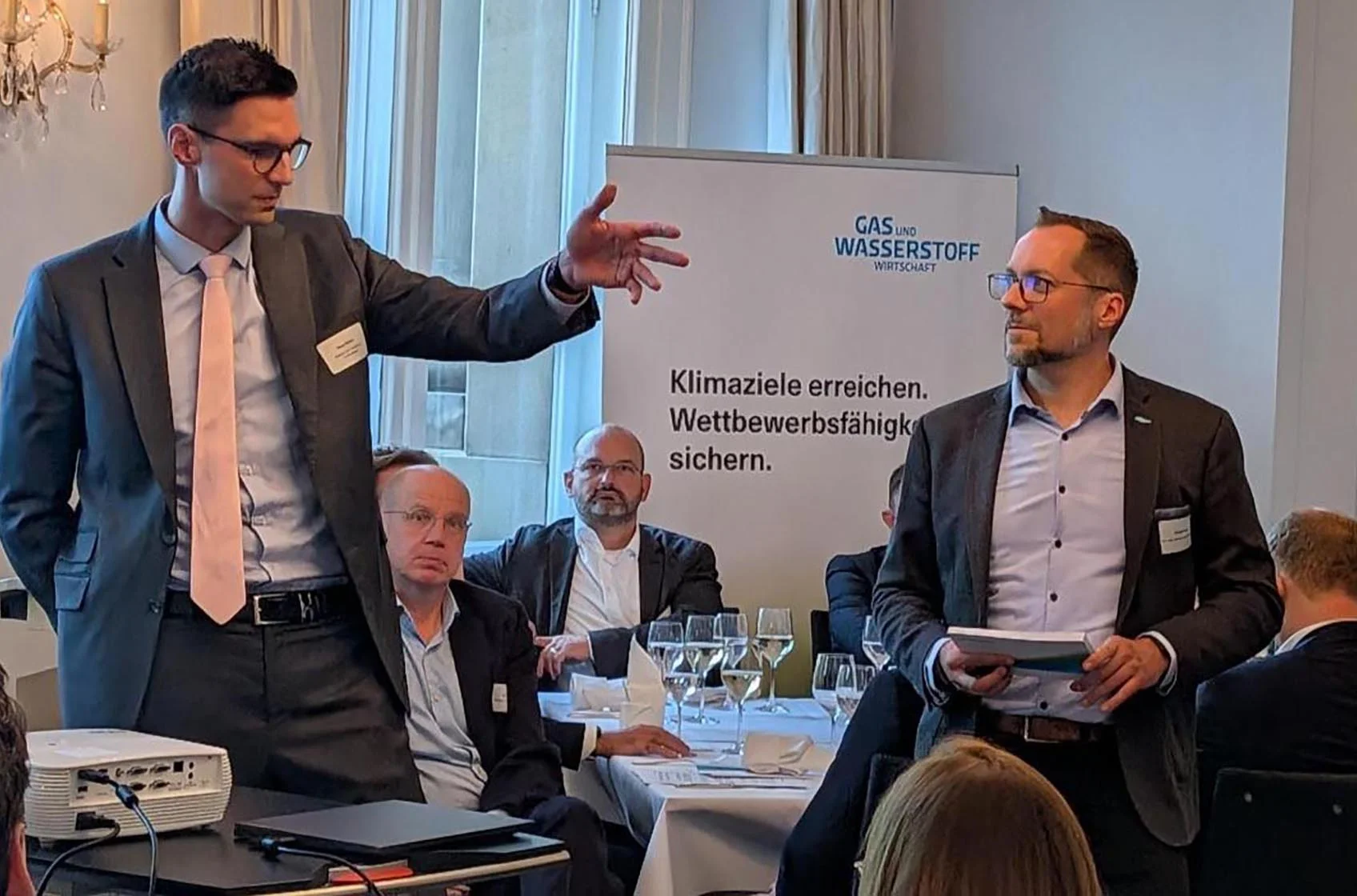
Representatives from politics, the energy sector, and European partner countries discussed at the German Parliamentary Society which experiences could be applied to Germany. Sepp Müller, Member of the Bundestag and Deputy Chair of the CDU/CSU parliamentary group, emphasized not only security of supply but also, in particular, domestic value creation and the importance of biomethane for rural areas. At the same time, the discussion made it clear: Germany needs a reliable expansion path, long-term grid connection prospects, and a European market for biomethane.
The ramp-up of biomethane is already significantly further along in several European countries than in Germany. In Denmark, biogas now accounts for nearly 40 percent of gas consumption. France links clear expansion targets to a biomethane quota and a legally enshrined right to feed gas into the grid, making it the current European leader in biomethane production. The Netherlands is purposefully further developing its existing gas infrastructure for green gases rather than decommissioning it. Ukraine, on the other hand, has significant production potential and could, in the long term, expand the European supply base while at the same time providing stability to its own damaged energy system.
What these different approaches have in common is that production, demand, and infrastructure are developed together. Clear goals, reliable rules, and long-term market prospects create the conditions necessary for companies to invest. Bengt Bergt, spokesperson for the Biomethane Task Force: “Our European neighbors show that the ramp-up isn’t a matter of potential, but of political reliability. A French producer knows he’s allowed to feed power into the grid—a German producer doesn’t know whether his grid connection will even still exist in ten years. Germany doesn’t have to copy any particular model. But we should take a very close look at what works elsewhere—and develop a pragmatic approach based on that.”
Because the potential is great here as well: In 2025, Germany consumed a total of 864 TWh of gas. So far, this has been offset by only 12.3 TWh of domestically produced biomethane fed into the grid. At the same time, around 100 TWh of biogas is already being produced today, most of which is converted into electricity on-site. For a growing number of these plants, funding will expire in the coming years — for many, a shift toward processing and feeding into the grid will then be the economically sensible option, provided that grid connection is secured. Bengt Bergt: “The volumes of biomethane are available, but they are not reaching the market. That is precisely why the issue of grid decommissioning is not a minor technical matter: Infrastructure that is decommissioned today will be missing tomorrow as a guarantee of resilience for a climate-neutral energy system. Without legally binding connection guarantees, no one will build a new plant. “Expansion, not dismantling, must be the motto—as our neighbors are also showing us.”
From the perspective of the Biomethane Task Force, Germany therefore needs a clear roadmap for biomethane. This includes reliable prospects for production and grid connection, as well as a stable sales market. The initiative calls for a grid connection guarantee of at least 20 years, including for new facilities. In addition, strategic biomethane suitability areas should be balanced with reliable, economically viable rules for grid connection, cost-sharing, and grid reinforcement. The planned green gas quota can also serve as an important tool in this regard. At the same time, the framework conditions for feed-in, trading, and reporting must be structured in such a way that a liquid German and European biomethane market can emerge. The goal must be to more closely link domestic production with European potential.
Bergt: “Biomethane offers Germany something that is becoming increasingly important in terms of energy policy: renewable energy from domestic and European production that can utilize existing infrastructure. France demonstrates a clear focus on its goals, Denmark highlights its close ties to agriculture, and the Netherlands demonstrates how infrastructure and the market can be jointly developed further. We should finally begin to systematically tap into this potential in Germany as well.”